



Nigeria
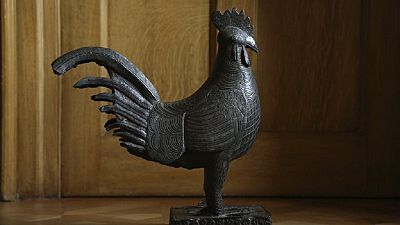
A bronze statue that was looted from what is now Nigeria more than a century ago will be returned, Cambridge University in Britain says.
The cockerel was taken in 1897 from the Court of Benin and given to the university several years later. The statue was removed from public view in 2016 after students protested, saying it represented a colonial narrative.
Governments and institutions in the West are under growing pressure to return artifacts taken decades or centuries ago, especially from Africa. Some have begun assessing their collections and discussing next steps to take.
Last year a report commissioned by French President Emmanuel Macron recommended that French museums give back works taken without consent, if African countries request them.
The experts who presented the report estimated that up to 90% of African art is outside the continent, including statues, thrones and manuscripts. Thousands of works are held by just one museum, the Quai Branly Museum in Paris, opened in 2006 to showcase non-European art — much of it from former French colonies.
Since the French report, Congo, Senegal and Ivory Coast have requested the return of artifacts.
Earlier this month, France restored to Senegal a sword that had belonged to 19th century Islamic scholar Omar Saidou Tall, who led an anti-colonial struggle against the French.
French Prime Minister Edouard Philippe visited Senegal to hand the sword to President Macky Sall.
Last week The Open Society Foundations, an international grant-making organization founded by billionaire George Soros, announced a four-year, $15 million initiative to help repatriate cultural objects to African nations.
AP




02:19
Anthony Joshua pays tribute to friends killed in Nigeria car crash
01:30
Police disperse protesters demanding compensation following mass eviction
01:12
Nigeria army rescues 11 kidnap victims on Kaduna–Abuja highway
Go to video
Nigeria: Soldiers face trial for alleged Tinubu coup plan
01:32
US, Nigeria diverge in details over strikes on militants
01:02
Over one million Nigerians face hunger due to funding shortages